
Teams that release rarely tend to release nervously. Big, infrequent releases pile up changes, hide bugs and make failures painful. Continuous integration and continuous delivery, together called CI/CD, solves this by making releases small, frequent and boring, which is exactly what you want.
CI and CD explained
- Continuous integration (CI): every time someone pushes code, an automated process builds the application and runs tests. Problems are found within minutes, while the change is still fresh.
- Continuous delivery (CD): every change that passes the checks can be released to production safely, with a push of a button or automatically.
- Continuous deployment goes one step further and releases every passing change automatically.
The minimum pipeline
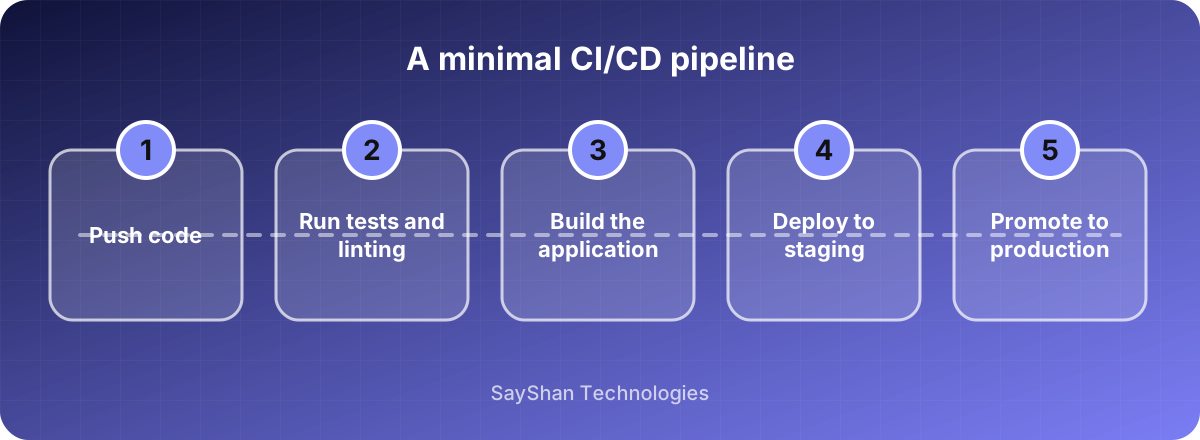
You do not need a complex platform to begin. A simple pipeline covers most of the value:
- On every push: install dependencies, run linting and the automated tests.
- On merge to the main branch: build the application and deploy it to a staging environment.
- After a quick check: promote the same build to production.
Popular tools include GitHub Actions, GitLab CI and Jenkins. Choose the one that lives next to your code; the concepts are the same.
Principles that matter
- Build once, deploy the same artefact everywhere. What you tested in staging is exactly what ships to production.
- Keep the main branch always releasable. Use short-lived branches and small pull requests.
- Keep secrets out of the repository. Use your CI provider's secret store and environment variables, and rotate keys if they leak.
- Make rollbacks easy. Keep previous releases available so you can go back in minutes.
- Automate the boring parts. Anything you do by hand on every release is a candidate for the pipeline.
Handle database changes carefully
Database migrations are the riskiest part of a release. Prefer changes that work with both the old and the new code, for example add a new column first, deploy code that uses it, and only later remove the old one. This lets you roll back the code without breaking the database.
Deployment strategies
- Rolling: replace servers gradually so the site stays available.
- Blue-green: run the new version next to the old one and switch traffic when it is healthy.
- Canary: send a small share of traffic to the new version first and watch the results.
- Feature flags: deploy code switched off, then enable it for chosen users.
Add safety gradually
Start with tests and a deployment script. Then layer on:
- Static analysis and security scanning of dependencies.
- Smoke tests that check key pages after deployment.
- Automatic rollback when error rates rise.
- Notifications to your team chat for every deployment.
Measure delivery health
Four simple measures show how your delivery process is doing: how often you deploy, how long a change takes from commit to production, how often deployments cause incidents and how quickly you recover. Improving these usually improves quality and morale together.
Key takeaways
- Small, frequent releases are safer than big, rare ones.
- Start with tests plus a deploy script and grow from there.
- Build once, keep secrets outside the code and make rollback easy.
- Design database changes to work with old and new code.
Keep learning
Frequently asked questions
Do small teams need CI/CD?
Yes. Small teams benefit the most because automation removes manual steps and prevents avoidable mistakes.
How long should a pipeline take?
Aim for feedback on tests in under ten minutes. Slow pipelines get ignored, so run the quick checks first and the slower ones afterwards.
Is it safe to deploy on Fridays?
If you have good tests, small changes, monitoring and easy rollback, yes. If a Friday deploy feels scary, that is a sign to improve the pipeline.
What should I automate first?
Automated tests on every push, then a one-command deployment to staging.