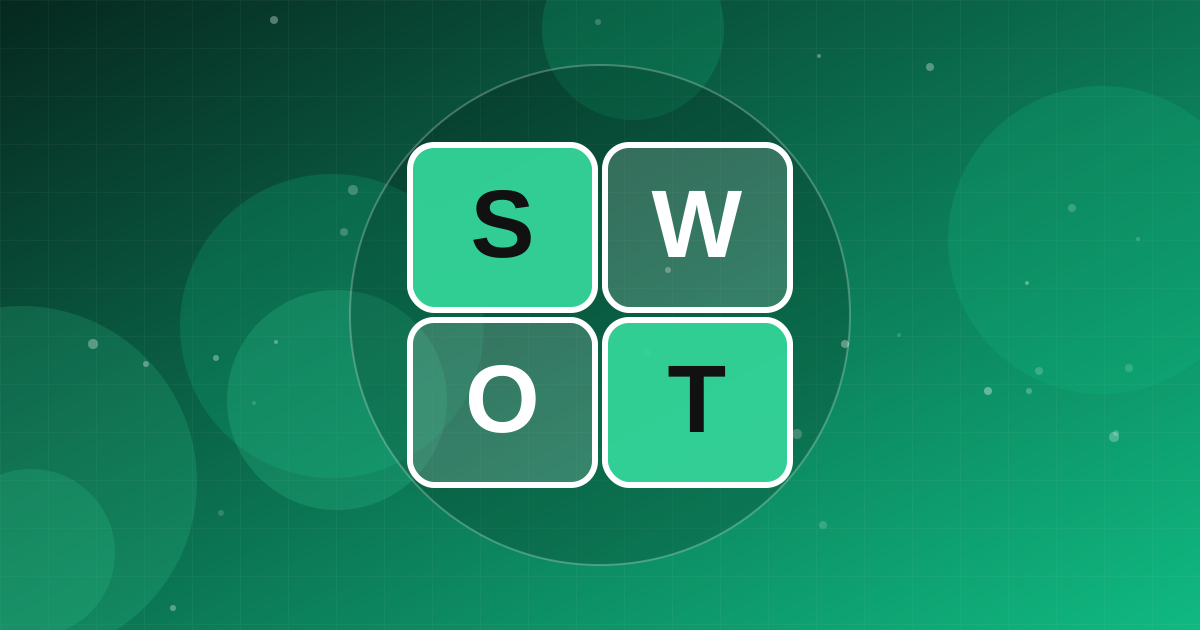
SWOT analysis is probably the most famous planning tool in business, and also one of the most wasted. People fill in four boxes in a meeting, feel productive, save the slide and never look at it again.
That's a shame, because done properly it's a quick, cheap way to see where you stand and decide what to do next. Here's how to get real value from it.
What the four letters mean
Strengths are things you do well that you control. A loyal customer base, a skilled team, a product people recommend.
Weaknesses are things that hold you back, also inside the business. Slow delivery, too much dependence on one client, no marketing budget.
Opportunities are outside chances you could use. A new market, a competitor that has stumbled, a change in technology or regulation that suits you.
Threats are outside risks. A new rival, rising costs, a platform changing its rules, shifting customer habits.
The easy way to remember it: strengths and weaknesses are about you, opportunities and threats are about the world around you.
Start with a question
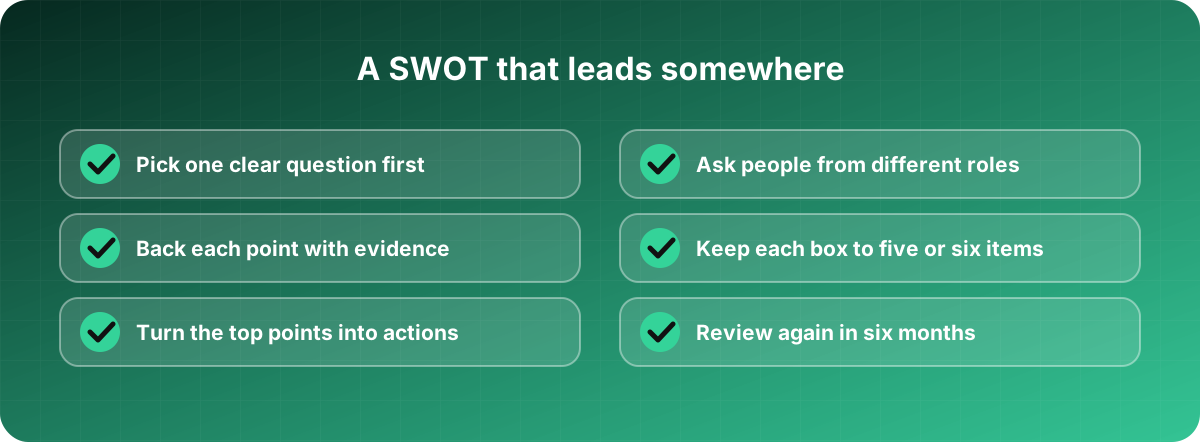
A SWOT on "the company" is vague, and vague questions give vague answers. Start with something specific: "Should we launch a mobile app?", "How do we grow in the next year?", "Should we enter a new city?" The same fact can be a strength for one question and irrelevant for another.
How to run it
- Gather different people. Sales, support, delivery and management see different things. The person answering customer complaints often knows your real weaknesses better than the owner does.
- Brainstorm alone first. Give everyone five minutes with sticky notes before talking, so the loudest voice doesn't set the tone.
- Fill in the four boxes. Aim for specifics. "Good customer service" is fluffy. "Customers get replies within an hour" is something you can check.
- Ask for evidence. For each point, what do we know? A survey, sales numbers, a customer comment, a lost deal? Gut feeling is fine as a starting point, but mark it as such.
- Narrow down. Keep five or six points per box, and cut the rest. A list of thirty things helps nobody.
- Connect the boxes. This is the step people skip, and it's where the value is.
Where the value is: connecting the boxes
Once you've listed things, ask four questions:
- How can we use our strengths to take an opportunity?
- How can we use our strengths to reduce a threat?
- How can we fix a weakness so we can take an opportunity?
- Which weaknesses combine with threats to put us at real risk?
That last one deserves special attention. A weakness that meets a threat is where businesses get hurt, for example depending on one big customer while a competitor is courting them.
Common mistakes
Being too kind. Teams list "great team" and "high quality" and skip the awkward stuff. Be honest. Your competitors already know your weaknesses.
Mixing up inside and outside. If you can change it, it's a strength or weakness. If it happens to you, it's an opportunity or threat. "Our website is slow" is a weakness. "Customers are moving to mobile" is an opportunity or threat.
Too long and too vague. "Competition" isn't a threat. Which competitor, doing what, affecting which customers?
No priorities. Not everything matters equally. Mark the few items that would have the biggest effect.
No follow-up. The analysis is only the start. Finish with two or three concrete actions, each with an owner and a date.
Treating it as permanent. Markets change. Look at it again every six months or after any big change.
A limit worth knowing
SWOT is a thinking aid, not a calculator. It doesn't tell you which factor matters more, and it can't predict the future. Use it to start good conversations and spot blind spots, then back your decisions with real data such as customer research, financials and market numbers.