Ask a small business owner about marketing and you'll often get a sigh. It sounds like an endless list: social media, ads, email, search, videos, events. Where do you even start, and how do you know what's working?
The good news is that a marketing plan doesn't need to be complicated. A one-page version that you actually follow will beat a thick document that nobody opens.
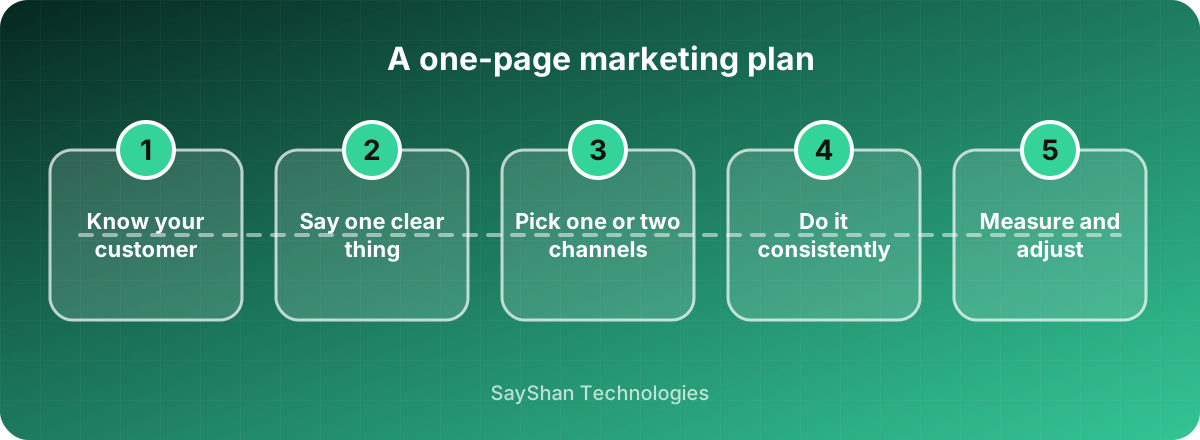
1. Know who you're talking to
Most weak marketing talks to "everyone". That means it speaks to nobody. Be specific about who your best customer is.
Think of your five favourite customers. What do they have in common? What problem were they trying to solve when they found you? Where do they spend their time, and what do they read or watch? Write a short description of that person, such as "owners of small clinics who are tired of managing appointments on paper". It doesn't have to be fancy.
If you can talk to a few real customers, even better. Ask why they chose you, what nearly stopped them, and what they'd tell a friend. Their words often make the best marketing copy.
2. Say one clear thing
What do you do, for whom, and why are you a good choice? If it takes a paragraph to explain, simplify it. People skim, and a confusing message gets ignored.
A useful format: "We help [who] do [what] so that [result]." Then add one reason to believe it, such as a result you've delivered, a guarantee, or years of experience. Specific beats grand. "We cut appointment no-shows for small clinics" beats "innovative healthcare solutions."
3. Choose one or two channels
You can't be everywhere, and trying will burn you out. Pick the places where your customers actually are, and do them well.
- Search (SEO): good if people look for what you offer. Helpful pages and blog posts answering their questions pay off slowly but steadily.
- Social media: good for visual products, community and staying visible. Choose the platform your customers use, not all of them.
- Email: underrated. A simple list of people who've said they want to hear from you gives you a direct line that no algorithm can take away.
- Paid ads: quick results, but they stop when you stop paying. Start small, test, and watch your numbers closely.
- Word of mouth and referrals: for many small businesses, the most effective channel. Make it easy and natural to ask happy customers for one.
- Partnerships and local presence: other businesses that serve the same customers, local groups, events and directories.
- Google Business Profile: for local businesses, a complete and up-to-date profile is often the cheapest, highest-return step.
If you're unsure, start with the channel where you already get customers and do more of it.
4. Set one goal
"Get more customers" isn't a goal. Try "get 15 qualified enquiries a month by the end of the quarter." A number tells you whether you're succeeding. It also helps you say no to distractions.
5. Make a simple calendar
Decide what you'll do, how often and who does it. For example: one helpful blog post every two weeks, a weekly email, a social post three times a week, a monthly request to past customers for a review. Be realistic. A small plan you keep up is better than a big one you abandon in three weeks.
6. Measure and adjust
Pick a few numbers that matter: enquiries, sales, where customers say they heard of you, website visits, email sign-ups. Ask new customers directly how they found you, because analytics can't always tell. Each month, look at what's working and do more of it, and drop what isn't.
Mistakes we see often
- Doing a bit of everything. Scattered effort rarely builds momentum.
- Talking about yourself. Customers care about their problem, not your history. Lead with them.
- Stopping too soon. Most marketing takes months to show results. Give a channel a fair run before judging it.
- Ignoring existing customers. It's usually cheaper to sell to people who already know you than to find new ones.
- Not following up. Many enquiries are lost because nobody replied fast enough. Check your response time first.
- Copying big brands. They have budgets and teams you don't. Lean on what you have: personal service, local knowledge and speed.
Your plan on one page
Write these six lines and stick them on the wall: who you serve, your one-sentence message, your one or two channels, your goal and number, your weekly activities, and how you'll measure. Review them every month. That's a marketing plan.