
Open almost any app while standing in a lift. Some show a spinner forever. Some show an error. A few just keep working, and you barely notice that the signal is gone. Those are the ones people trust.
That behaviour has a name: offline-first. The idea is that the app treats the internet as a bonus, not a requirement.
The mindset change
In a normal app, tapping "save" sends a request to the server and waits for the reply. If there's no connection, the action fails.
In an offline-first app, tapping "save" writes the data to the phone's own storage and updates the screen immediately. A background process sends it to the server whenever a connection is available. The user never waits for the network.
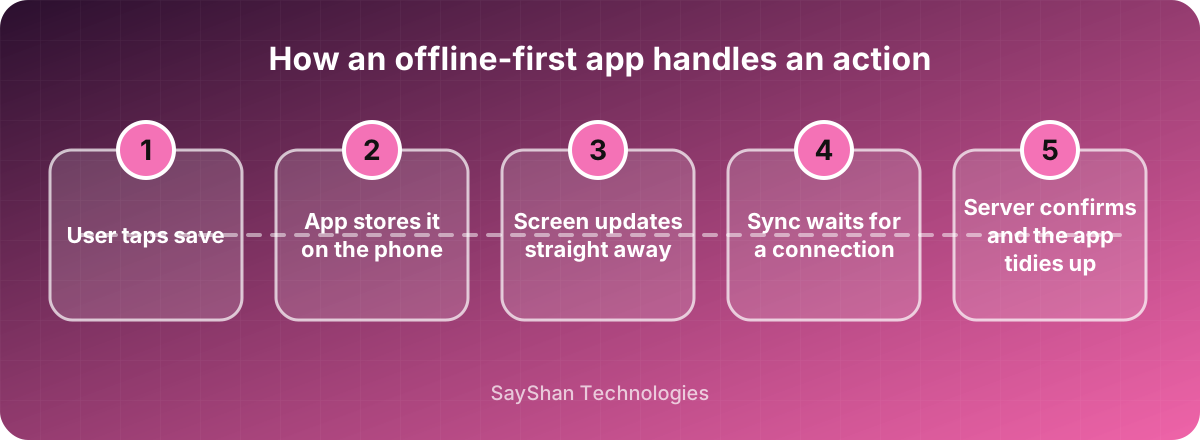
A side effect people like: the app feels faster, even with perfect signal, because nothing waits on a round trip.
Who needs this most
Plenty of users don't have fast, steady internet. Delivery riders move between coverage areas all day. Field workers inspect sites in basements and rural areas. Shoppers browse in markets with crowded networks. Students use apps on long bus rides.
If your users live in places where connectivity is patchy, which describes a lot of the world, offline support isn't a luxury. It decides whether your app is usable.
What you need to build
At minimum, a local database on the phone. SQLite is the common choice and most frameworks have good tooling around it. Then a sync layer that sends local changes to the server and pulls remote ones down. And a queue, so actions taken offline are remembered and replayed in order.
You also need to show people what's going on. A small indicator like "saved on this device, will sync soon" prevents the worry that something got lost.
The hard part: conflicts
Here's where offline-first gets tricky. Imagine two people edit the same customer record, one on a train with no signal and one in the office. When the train passes through a station and the phone syncs, which version wins?
There's no universal answer. Some apps simply take the most recent change. Others merge field by field, so one person's phone number edit doesn't overwrite another's address edit. For things like documents, you may need to ask the user. Decide on your rule early, because it's painful to add later.
Other things to plan for: what happens when a login expires while offline, how much data to store on the phone, and what to do with actions the server later rejects, for example an order for something that sold out in the meantime.
You don't need to go all in
Offline-first is a spectrum. Even a small step helps. Cache the last loaded screen so it shows something instead of a blank error. Let people read content offline. Queue a few simple actions like "mark as done" or "add a note".
Payments, live stock levels and anything that must be correct at this exact moment can stay online-only. Just be clear with the user about it.
Is it worth the effort?
It adds real development and testing time, since you have to test the messy cases: flaky signal, airplane mode, interrupted sync. But for apps used on the move, the payoff in reviews and retention is usually worth it. Start by asking where your users actually are when they open the app, then decide how far to go.