There's a whole industry around "prompt engineering" now, with courses, cheat sheets and people selling secret formulas. Most of it is noise. After using these tools a lot, our view is that good prompting is mostly just good briefing. It's what you'd do if you handed a task to a smart new colleague who has never heard of your company.
Here are the habits that make the biggest difference.
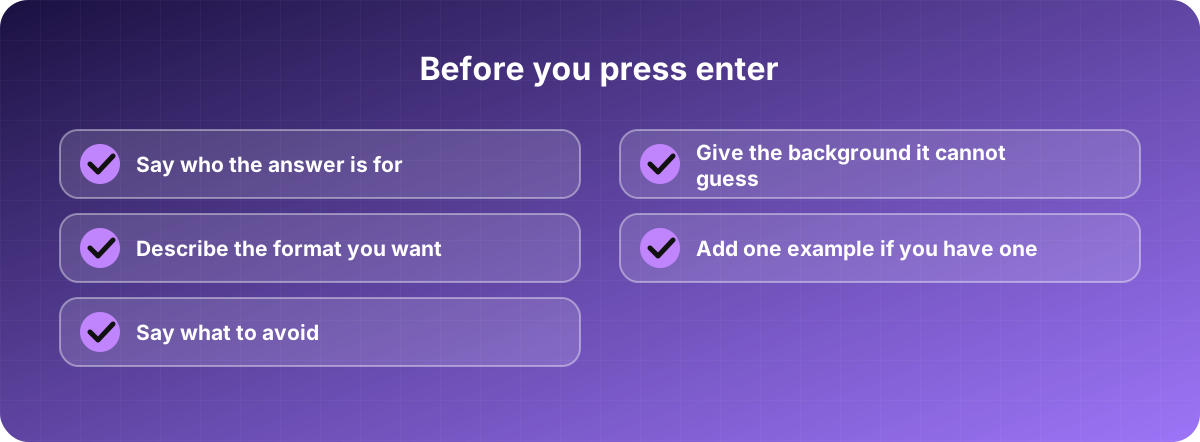
1. Say who it's for
"Write an email about the delay" will give you something bland. "Write an email to a long-time customer whose order is five days late; they're annoyed but not angry" gives the model something to aim at. The audience changes the tone, the length and what you leave out.
2. Give the background it can't guess
The model doesn't know your refund policy, your product's quirks or that this particular client hates jargon. If it matters, put it in. A few sentences of context usually beat a long list of instructions.
People often skip this because the context feels obvious to them. It's obvious because you live in it. The model doesn't.
3. Describe what a good answer looks like
Do you want three bullet points or a full page? A table? A friendly tone or a formal one? Plain language for a ten-year-old or technical detail for an engineer? If you don't say, you'll get the model's default, which is usually longer and more generic than you wanted.
4. Show an example
If you have a sample of the style you want, paste it in. "Write product descriptions like this one:" followed by a good description works better than three paragraphs trying to explain your brand voice. Examples are the closest thing to a shortcut that exists.
5. Say what to avoid
"No buzzwords." "Don't promise a delivery date." "Don't mention the competitor." Constraints are easy to forget and cheap to add. They also help you spot mistakes later, because you know what you asked for.
Treat it as a conversation
The first answer is a draft. Read it, then reply the way you would to a colleague: "Shorter, and drop the second paragraph." "Make it warmer." "You assumed the customer paid by card; they paid by bank transfer." Iterating is faster than trying to write the perfect prompt in one go, and it's how most people actually get good results.
If a chat has wandered off course, start a fresh one. Piles of old instructions can confuse things.
What doesn't help much
Magic phrases. You'll see claims that adding "take a deep breath" or "you are a world-class expert" transforms results. Sometimes a role helps focus the style, but it's no substitute for real context. Clear information beats clever wording almost every time.
Always check the answer
Models write confidently even when they're wrong. They can invent numbers, quotes and sources. Anything with a fact, a figure or a legal or medical angle needs a human check. A good habit is to ask, "What in this answer are you least sure about?" It doesn't catch everything, but it often surfaces weak spots.
Don't paste in anything sensitive, like customer personal data, passwords or confidential contracts, unless your company has approved that tool for it.
Make the good ones reusable
When a prompt works well, save it. A shared document of prompts that your team has tested, such as "summarise this meeting" or "reply to this support ticket", saves everyone time and keeps quality consistent. It's a low-effort way to get real value from AI across a team.