Offshore and remote development teams can give you skilled engineers, flexible capacity and a sensible cost. Many businesses, from startups to large enterprises, work this way every day. The partnerships that succeed share a few simple habits, and none of them depend on time zones.
Why companies choose an offshore team
- Access to skills you cannot easily hire locally, such as mobile, AI or specific frameworks.
- Cost efficiency without cutting quality when the team is well managed.
- Flexibility to scale up for a project and scale down afterwards.
- Faster delivery through dedicated capacity and sometimes extended working hours.
Start with clarity
Most problems blamed on distance are actually problems of unclear expectations.
- Write down the goals, the users and what "done" means for each feature. A short document beats a long meeting.
- Share examples, sketches, competitor references and any existing systems. A picture removes a page of misunderstanding.
- Agree on priorities so the team always knows what to do next, and what can wait.
- Define quality: coding standards, testing expectations and browsers or devices to support.
Choose the right engagement model
- Fixed scope, fixed price: works for well-defined projects, but changes cost extra and need a process.
- Time and materials: flexible when requirements will evolve, with budget controls and regular reviews.
- Dedicated team: a stable group that learns your product over time, ideal for long-term work.
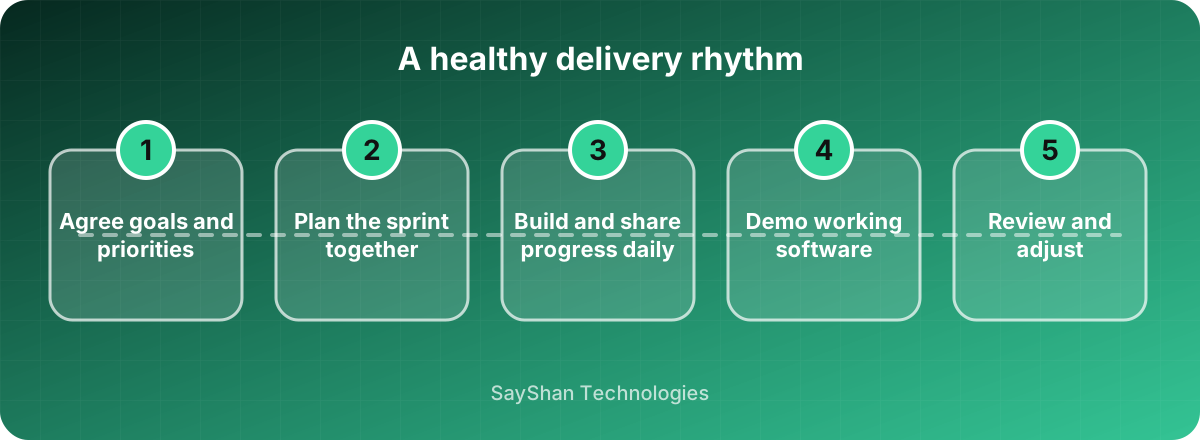
Communicate on a rhythm
- A short weekly planning call and a demo at the end of each sprint.
- A shared chat channel for quick questions and a single place for task tracking.
- Overlap a few working hours each day, even if the rest of the time differs.
- Written summaries after calls, so decisions are not lost.
- Be kind with language: not everyone speaks the same first language, so prefer simple, direct wording.
Keep visibility
Ask for working software every one or two weeks, not only at the end. Early demos reveal misunderstandings while they are still cheap to fix. Give access to the repository, task board and staging environment from day one, so you can see progress without asking.
Treat them as part of your team
Share the business context, introduce the team to stakeholders and customers where possible, and give honest, respectful feedback. People who understand why they are building something make better decisions, and they stay motivated. Celebrate wins together.
Protect the basics
- Ownership: agree in the contract that you own the code and intellectual property.
- Access: keep your own accounts for repositories, cloud hosting, domains and app stores; never let them live only with the vendor.
- Documentation: require clear READMEs, setup instructions and architecture notes.
- Security: use least-privilege access, separate credentials per person and a non-disclosure agreement.
- Continuity: make sure more than one person understands each part of the system.
Common pitfalls
- Vague requirements followed by surprise at the result.
- Communication only through the sales contact rather than the engineers.
- No acceptance criteria, so "done" is a matter of opinion.
- Treating the team as a ticket machine instead of a partner.
Key takeaways
- Clear goals, priorities and definitions of done matter more than location.
- Meet on a rhythm and demand working software often.
- Own your code, accounts and documentation.
- Build trust through context and honest feedback.
Keep learning
Frequently asked questions
How do we handle time zone differences?
Agree a daily overlap of a few hours for questions and decisions, and use written updates for the rest. Many teams find the gap helpful because work continues while you sleep.
Is offshore development lower quality?
Not inherently. Quality depends on the team, the process and the clarity of requirements. Check portfolios, ask for references and start with a small paid pilot.
What should be in the contract?
Scope or rate, timelines, payment terms, intellectual property ownership, confidentiality, support after delivery and how changes are handled.
How do I know the work is progressing?
Look for frequent demos of working software, a visible task board, regular commits and automated tests, instead of only status reports.