
Almost every cross-platform app conversation we have ends up here. Flutter or React Native? People expect a winner, and we'd love to give one, but it doesn't exist. Both are mature, both ship real apps used by millions, and both will do the job for most products.
What differs is how they work, and that changes which one suits you.
How they differ under the hood
Flutter, from Google, uses the Dart language. It doesn't use the phone's built-in buttons and menus. Instead it draws every pixel itself with its own rendering engine. That's why a Flutter app looks identical on every device, and why custom animations tend to feel smooth.
React Native, from Meta, uses JavaScript or TypeScript, and it maps your components to the real native ones. A button in React Native is an actual iOS or Android button. So the app picks up the look and behaviour of each platform without much effort.
Neither approach is better in every case. Drawing everything yourself gives you control. Using native components gives you familiarity.
Where Flutter fits well
If your designer has drawn something distinctive, with custom transitions, unusual layouts and a strong brand feel, Flutter makes it easier to get exactly that on both platforms. It also suits teams starting from scratch who don't have a strong JavaScript background, since Dart is quick to learn and the tooling is polished. Hot reload is very good.
The downsides: Dart is rarely used outside Flutter, so your team's skills don't carry over to other work. App sizes also tend to start a bit larger. And if you want the app to feel exactly like each platform's own style, you'll do some extra work.
Where React Native fits well
If your team already writes JavaScript or TypeScript, particularly React for the web, the learning curve is gentle. You can share ideas, and sometimes code, with your website. Hiring is easier too, because the pool of JavaScript developers is huge.
The ecosystem is enormous, and there are libraries for nearly everything. The catch is that quality varies. A third-party package can lag behind a new OS release, and now and then you'll need a developer who can write a bit of native Swift or Kotlin to bridge a gap.
What about performance?
For ordinary business apps (lists, forms, maps, chat, payments) both are fast enough that your users will never notice a difference. Poor performance in real projects almost always comes from how the app was built, such as loading too much data at once, not from the framework.
If you're building something graphics-heavy like a 3D game, a camera-filter app or advanced video editing, you should talk to a native developer before choosing either.
The questions that matter more
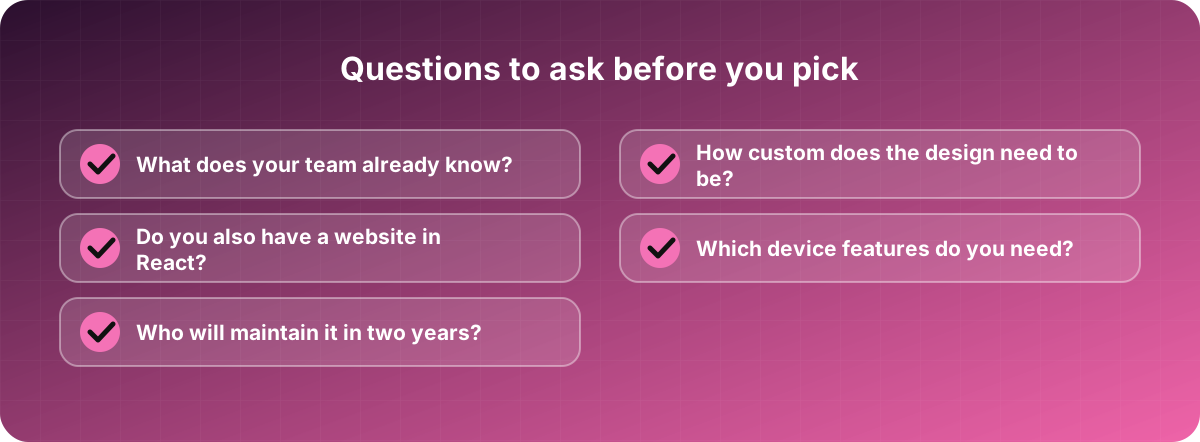
The honest answer to "which is better" is usually found in the checklist. What does your team know today? How custom is the design? Will the same people maintain it in two years? A framework your team enjoys and can hire for will beat a theoretically better one nobody knows.
What we'd say to a founder
If you have a small team with web experience, go with React Native. If you're starting fresh with a design-heavy product, Flutter is a strong choice. If you're unsure, build a small prototype of your trickiest screen in each. It takes a few days, and you'll learn more than any article, including this one, can tell you.