ERP stands for enterprise resource planning, which is a grand name for something fairly simple: one system that handles the main parts of running your business, such as sales, stock, purchasing, accounting, HR and reports, all sharing the same data.
The idea is attractive. The reality is that ERP projects have a reputation for running late, over budget and disappointing the people who use them. So before you shop, ask whether you need one at all.
Signs you may be ready
You enter the same information in several places. A sale gets typed into a spreadsheet, again into the accounting software, and again into a delivery list. Each copy is a chance for a mistake.
Nobody agrees on the numbers. Sales says one thing about stock, the warehouse says another, and finance has a third. Reports take days to assemble by hand.
You've grown and the old tools creak. What worked for five people doesn't work for fifty. Orders get lost, approvals stall and it takes someone's whole week to close the month.
You're losing money to errors you can see: stock you thought you had, invoices you forgot to send, purchases made twice.
And you can't answer simple questions quickly. Which products make money? Which customers pay late? What do we owe suppliers this month?
Signs you may not be
If the business is small and simple, a good accounting package and a couple of well-organised tools may be all you need. An ERP adds cost, training and rigid processes that a small team can find suffocating.
If your processes are chaotic, software won't fix that. An ERP forces you to define how things work, and if you don't know how your business runs, you'll be configuring confusion. Sort out the process first.
And if nobody has time to own the project, wait. ERP rollouts need a committed person inside the company who knows the business and has authority to make decisions.
Why projects go wrong
Trying to do everything at once is the classic mistake. A big-bang launch across every department turns small problems into a company-wide crisis.
Customising too much is another. Every special tweak makes the system harder to update and more expensive to maintain. A good rule is to change your process to fit the software where you reasonably can, and customise only what genuinely gives you an advantage.
Skipping the people side hurts as well. If staff aren't consulted or trained, they'll quietly go back to their spreadsheets, and you'll have paid for a system nobody trusts.
Finally, bad data. Moving messy customer lists and stock records into a shiny new system just gives you messy data in a shiny new system. Clean it first.
Packaged, custom or something in between
Ready-made ERP products are proven and come with support, but you adapt to them and pay licence fees. They suit businesses with fairly standard processes.
Custom-built systems fit your way of working exactly, and you own them. They cost more upfront and need a team to maintain them. They make sense when your process is the thing that makes you different.
A mix. Many businesses use a standard system for the basics, such as accounting, and add custom modules or integrations for what's unique. Often that's the sweet spot.
How to choose
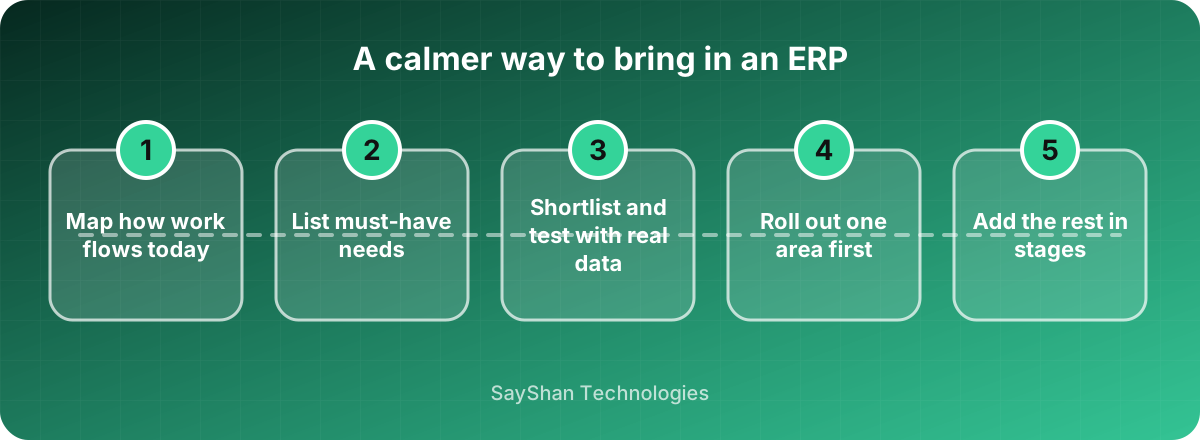
Start by drawing how work really flows today, from enquiry to payment. Write down what you absolutely need versus what would be nice. Shortlist a few options, and don't judge them by a demo with perfect sample data. Test them with your own real examples, and let the people who'll use it every day try it.
Ask about the full cost: licences, setup, training, support, upgrades and what it costs to leave. And check how well it connects to the tools you'll keep, such as your website, payment gateway and bank.
Then start small. Pick one area, perhaps stock and sales, get it working properly, learn from it, and add the next piece. A slower rollout that everyone actually uses beats a fast one they resent.