"Agent" is the word everyone in AI is using right now, and it's being stretched to cover almost anything. So let's pin it down. An AI agent is a program that takes a goal, works out the steps, and uses tools to carry them out, checking its own progress as it goes.
A chatbot talks. An agent does things.
The parcel example
Ask a chatbot "where's my parcel?" and you'll get a nice explanation of how tracking works. Ask an agent and it looks up your order, queries the courier's system, notices the parcel is stuck at a depot, and tells you the new delivery date. Maybe it also opens a ticket if the delay is longer than a week.
Same language model underneath. The difference is that the agent has hands: access to your order database, the courier's API, your helpdesk.
What's inside one
Strip away the marketing and most agents are four things stacked together. A language model that reads the goal and decides what to do next. A set of tools it's allowed to call. Some memory of what it has already tried in this task. And rules about what it must never do.
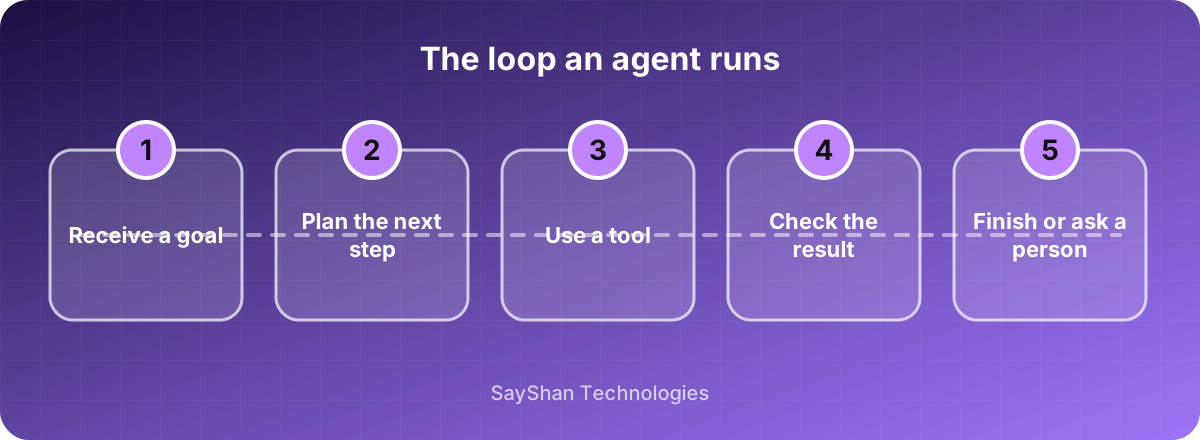
It goes round that loop (plan, act, check) until it's finished or stuck. The "stuck" part is where most of the engineering effort goes, honestly. Getting an agent to do the happy path is easy. Getting it to stop and ask for help at the right moment is the hard bit.
Where agents earn their keep
Look for work that has several steps, touches more than one system, and follows a pattern your team repeats every day. Triage is a good example: reading incoming bug reports, finding the related code, and suggesting who should look at it. Invoice matching is another. So is pulling together the background on a new sales lead before a call.
These jobs are boring, they eat hours, and a wrong answer is easy to spot and fix. That combination is what you want.
Where we'd keep a person in charge
Anything expensive or hard to undo. Refunds over a set amount, deleting accounts, contract wording, emails to your whole customer list. An agent can prepare these and a human clicks the button. We'd hold that line even when the demo looks flawless, because demos don't include the weird request that arrives on a Tuesday afternoon.
Giving it access without regretting it
Start read-only. Let the agent look at things and write drafts for a few weeks, and compare its work with what your team would have done. Only then let it take small actions, one type at a time.
Log everything it does, in plain language you can read later. When something goes wrong, and eventually something will, the log is the only way to find out why.
Set limits too: how long it may run, how much it may spend on model calls, how many times it may retry. An agent stuck in a loop can burn through a budget faster than you'd expect.
For connecting tools, look at open standards like the Model Context Protocol (MCP), which gives AI models a common way to discover and call tools. It saves you from writing a custom integration for every pairing. Whatever you use, give each tool the least access it needs.
Is it worth it for you?
If your team has a repetitive, multi-step task and someone who can review the output, a small agent pilot is cheap enough to try. If you're hoping it will run a whole department unattended, we'd lower the expectations. Today's agents are best at being a fast, tireless junior colleague who still needs a manager.